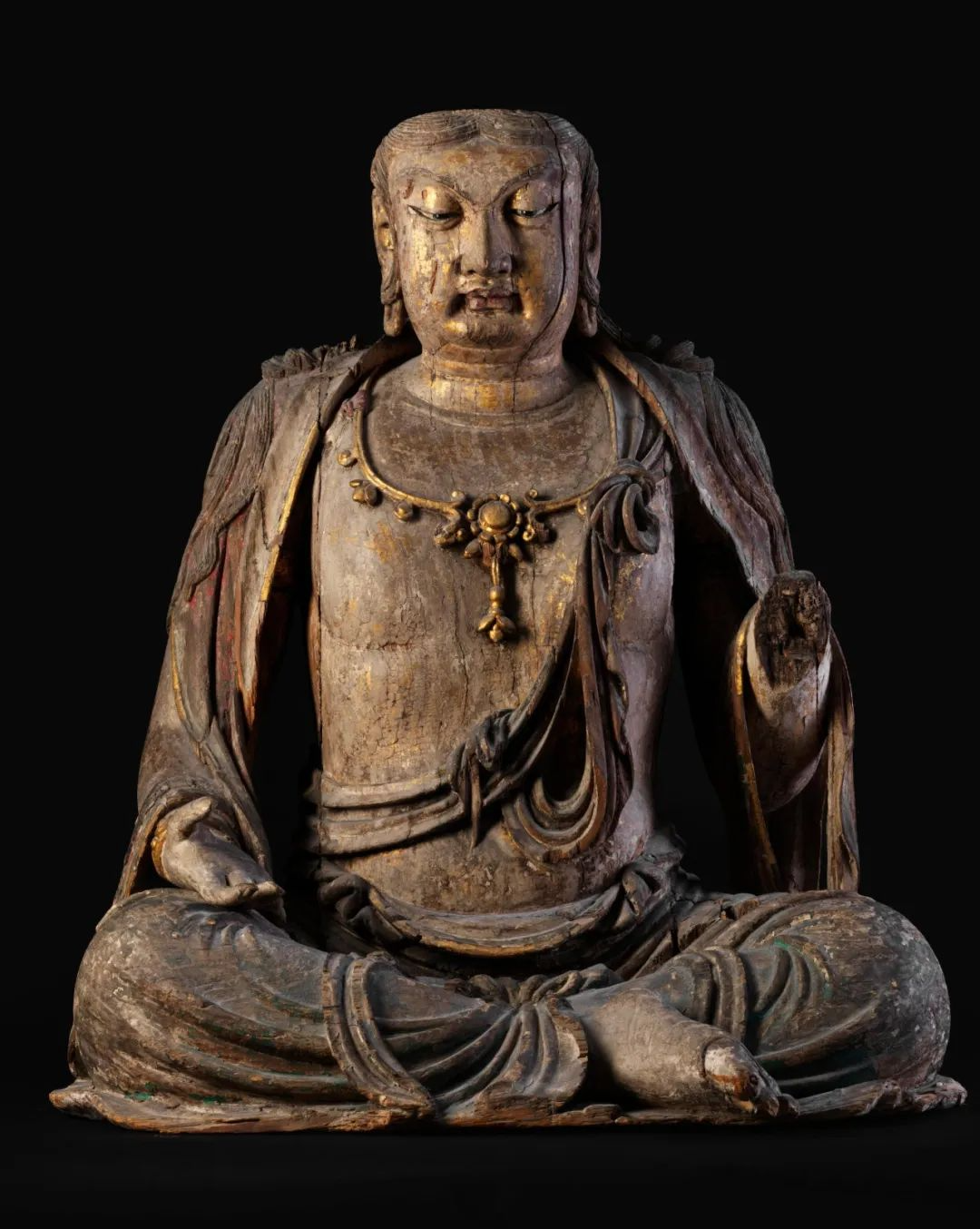
Wood carvings painted gold statue of Guanyin.
2023-09-05 15:00:43
福木源紫檀博物馆
Jindai wood carved statue of KannonThe statue is a work of the Jin Dynasty, when social unrest and w

Jindai wood carved statue of KannonThe statue is a work of the Jin Dynasty, when social unrest and wars were frequent, but Buddhism flourished. From 1114 to 1127, the nomadic Jurchens from the steppe achieved unprecedented success in less than 15 years. They defeated two of the most powerful regimes in all of East Asia at that time, the Khitan and China. The former was completely annexed, and only a small number of remnants fled west, which was later called Western Liao; The latter had to give up almost a third of its territory in the north, the Central Plains, where traditional China was located. It would not be until 150 years later that the region regained its part of China under the rule of the Mongols, another conqueror from the north. However, when the Jurchens rose to prominence and rapidly expanded their territory, the Jin Dynasty they created also faced great challenges in social governance.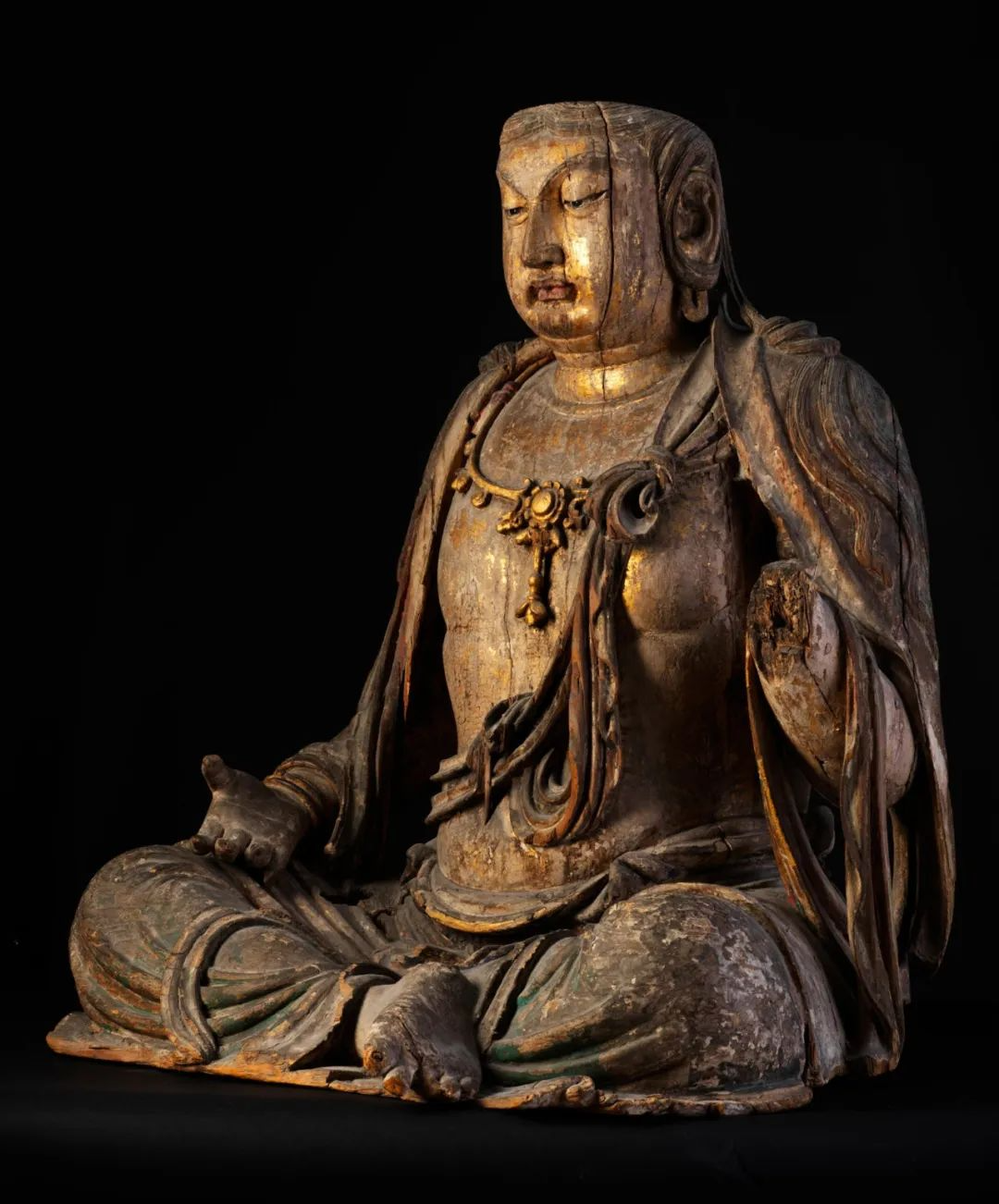 There is a golden generation, and social unrest is frequent. The Jurchens, who were originally nomads, did not have a well-established hierarchy and did not have a stable tradition of governance like the Liao dynasty they conquered. Before 1120, the Jurchens did not have writing, and the experience of alliances with other peoples was lacking. Maintaining peace among its internal tribes and simultaneously governing a multi-ethnic state was a considerable challenge for the Jurchen rulers of the time.It was in this context that Buddhism gained momentum during the Jin Dynasty. As a foreign ethnic group in the Central Plains, the Jurchens are well aware that Buddhism is not a native religion in China. Especially in the hundreds of years of the revival of neo-Confucianism in the Song Dynasty, Buddhism originating in India was not officially supported and revered in Middle-earth as it was in Inner Asia, but was to some extent ignored and even despised. It is only in the Taiyuan and Wutaishan areas, located in the Song-Liao border region, that a large number of wooden carved Buddha statues are still made for religious activities due to their status as religious centers.The Jin dynasty's support for Buddhism can be seen in numerous Buddhist scripture inscriptions, as well as in the ambitious official re-engraving of Buddhist scriptures completed in Shanxi in 1192. The Jurchens' reverence for Buddhism is also reflected in the appearance and volume of existing Buddha statues from that period. These large, colorful wooden statues were originally made for Buddhist temples in northern China. Many Buddhist temples have courtyards and buildings dedicated to worship, teaching, and monks' living, and their size is comparable to that of palaces of the time. Building on this tradition, the Jurchen rulers of the Jin Dynasty gradually replaced the original shamanism with Buddhism as the state religion, and left behind temples, tombs and tangible cultural heritage with a strong Buddhist influence for future generations.Sculptures of this magnitude should have originally been placed in a temple full of painted murals, surrounded or surrounded by other Buddha statues and arhat statues that were also painted in gold. Coupled with its deeply carved clothing patterns, ornate accessories, and surviving paintings, one can imagine the shock that pilgrims could feel when they entered the temple hall and saw the Buddha statues. At that time, the pigments used for wood carvings came from only three minerals: lime, cinnabar, and patina. All colorful shades are produced by mixing different pigments with different proportions. The flesh-colored and light red tones used to decorate the facial features or skin of the statue are made from a mixture of cinnabar and kaolin.
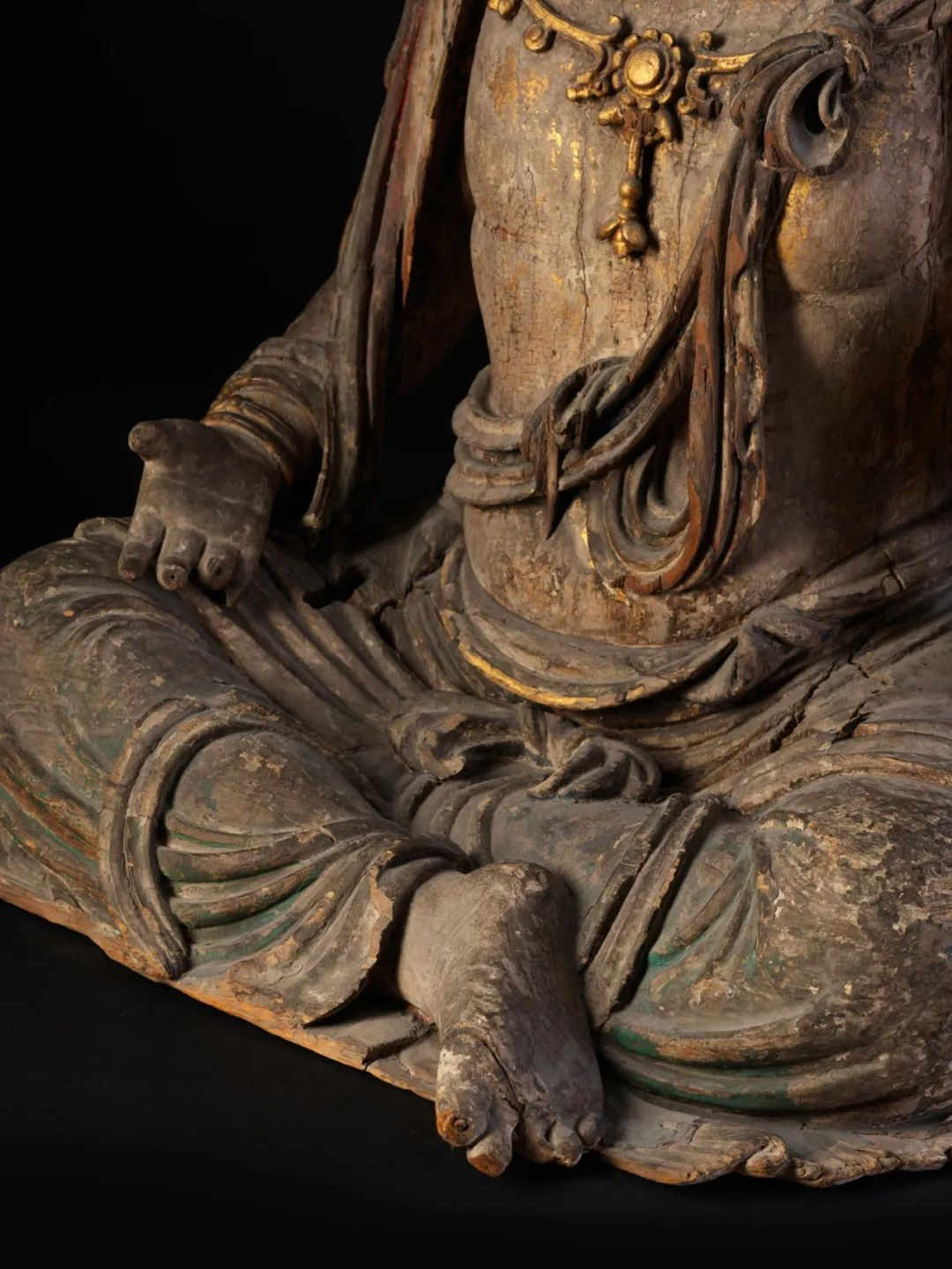 The best of the Jin dynasty wood-carved Buddha statues, this piece also shows stylistic influences from the Gupta dynasty (320-647) in India, which also has a Hellenistic tradition. Under the beautifully layered pleats of this piece, it still has a realistic body contour. Its bare breasts are not of Han tradition, but are derived from foreign representations that arrived in Middle-earth via the Silk Road around the time of the Tang Dynasty. But the rich face of this product also shows that the sculptors of the Jin Dynasty did not follow the tradition, but further developed a unique style of the era on top of it.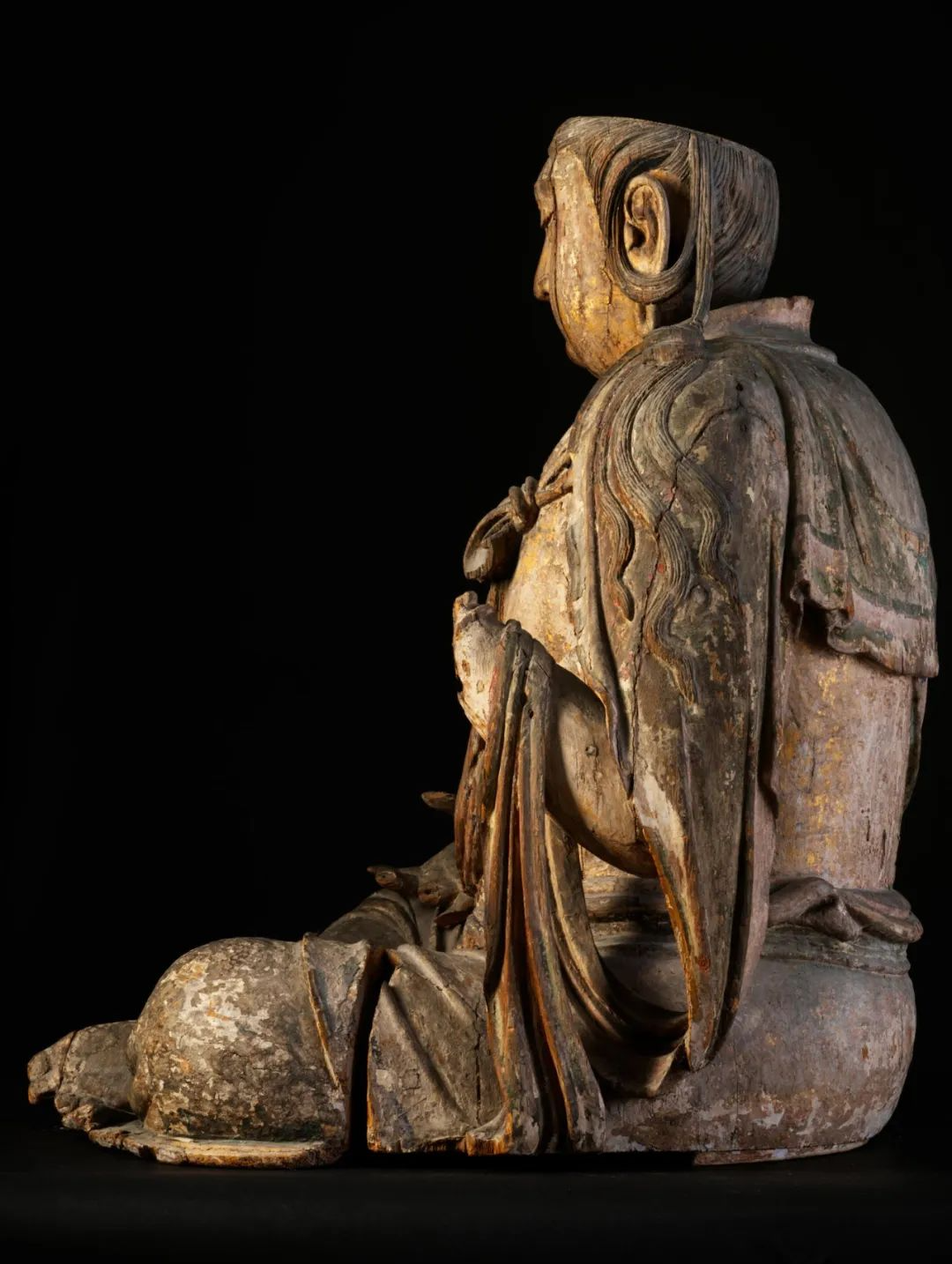








Long press to recognize and share with friends
![Long press to recognize and share with friends]()


Please first Loginlater ~